The river running past Sumi no Ie consistently ranks among the clearest in Japan. The geology, the forest management, and the lack of industry all play a part.
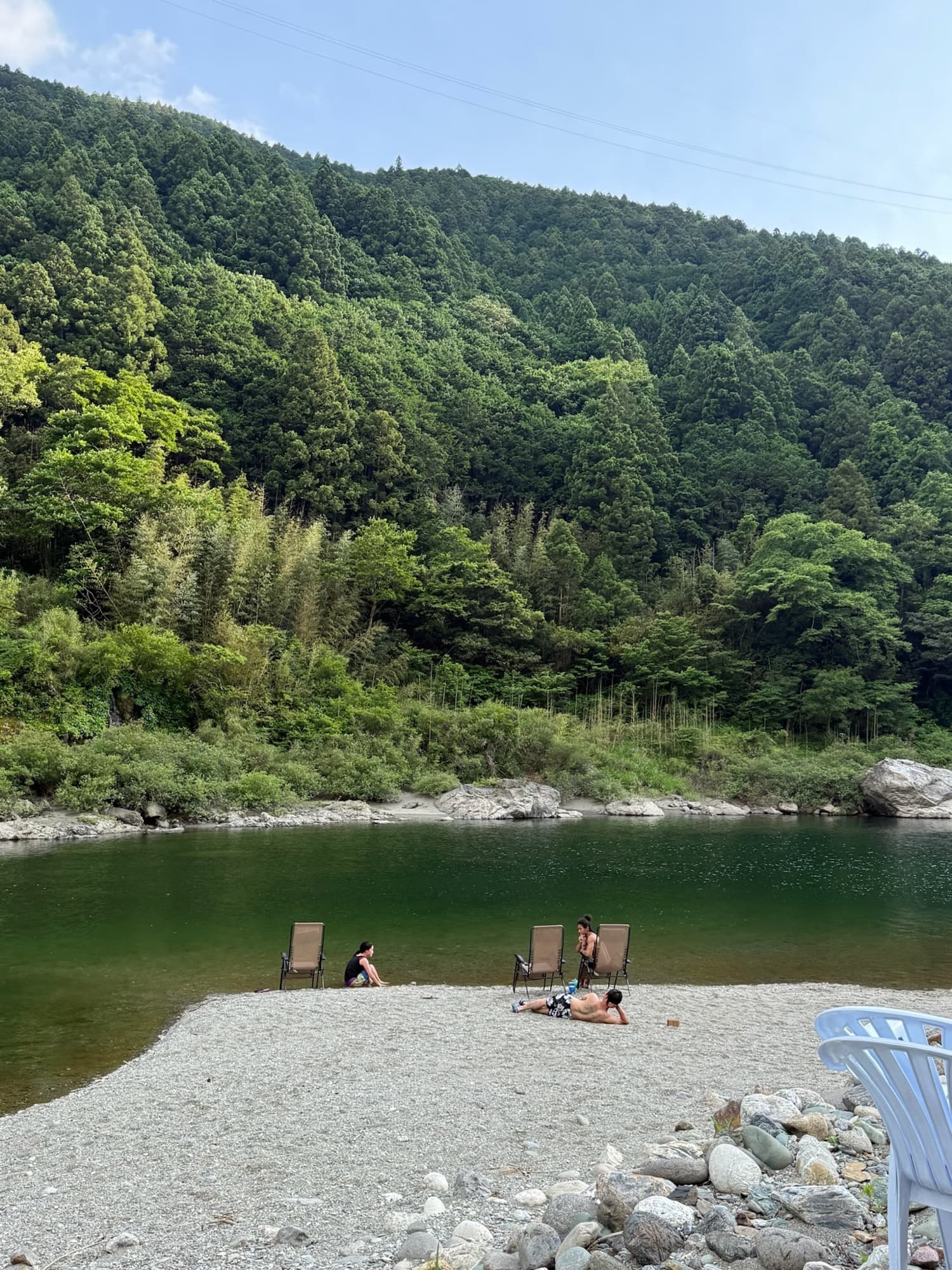
The Shimanto River is usually called the clearest in Japan. Locals will tell you the Niyodogawa is clearer. The difference is hard to measure and easy to argue about, but what isn't arguable is that the Niyodogawa runs an extraordinary blue-green in summer — the kind of colour that looks digitally enhanced in photographs.
The geology helps. The watershed sits on granite and crystalline schist, which filter water slowly and don't add the minerals that cause turbidity. The catchment area is large relative to the amount of human activity in it.
The forest matters more. The trees on the valley slopes hold the soil. When it rains — and it rains heavily here, especially in typhoon season — the water moves through root systems and leaf litter before it enters the river, not across bare ground. The forestry cooperative's management practices directly affect water quality downstream.
There's also just not much industry. No large-scale agriculture in the immediate watershed, no manufacturing that discharges into tributaries. The population decline that worries demographers has, unintentionally, kept the river clean.
At Sumi no Ie, the river is about a two-minute walk from the front door. In summer you can wade in. In autumn the water is lower and completely still in the shallow sections. It's the main reason people come back.