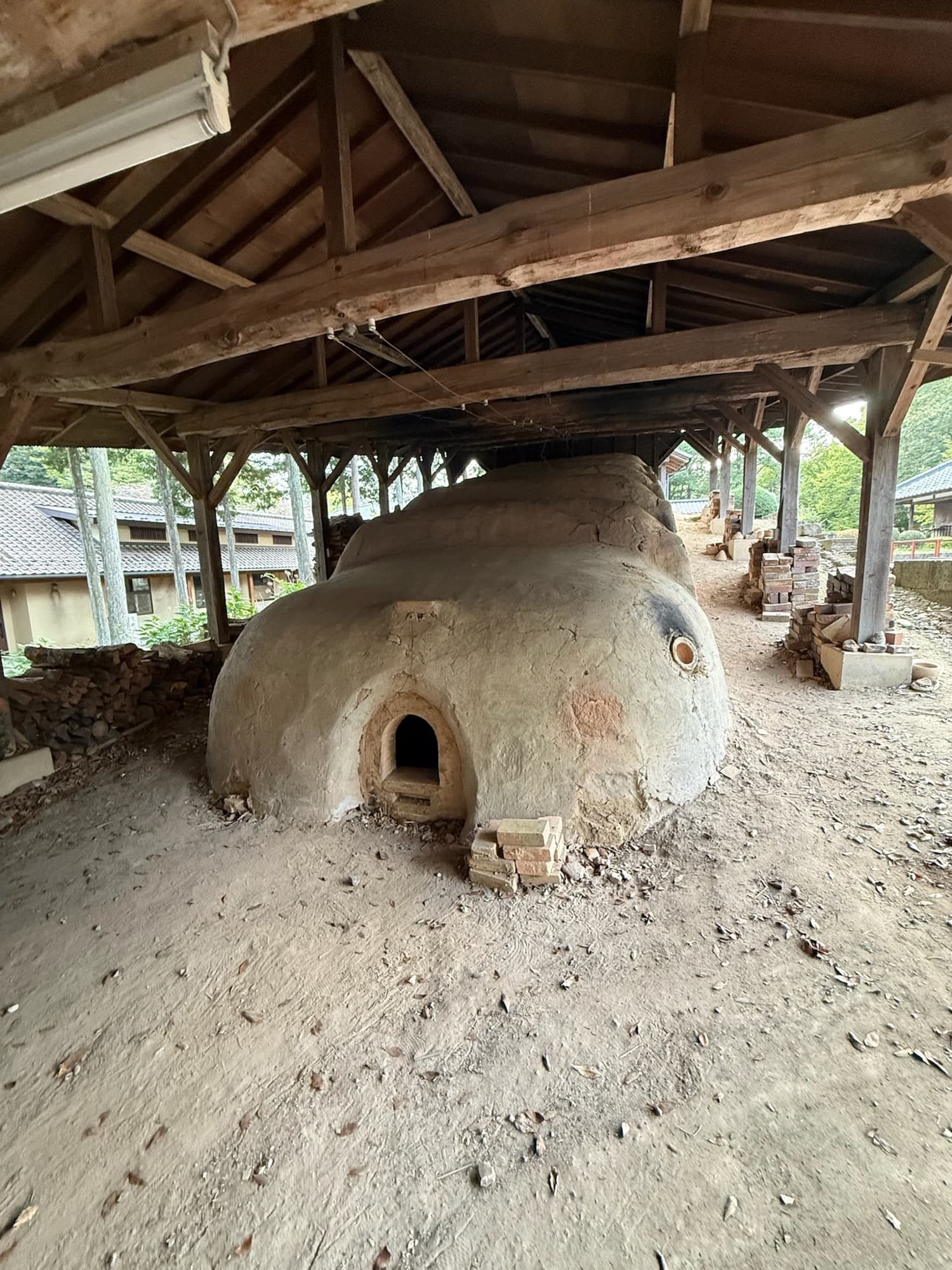
The earthen kiln has been in the same spot for decades. We spend a full day at the fire, from the first split log to the moment the flue is sealed.
We start before seven. The wood from last month's harvest has been drying under the eave since February, split into arm-length pieces, standing on end so the cut faces can breathe. By now the moisture is mostly out. You can tell by the weight.
Packing the kiln is slower than it looks. The pieces have to stand upright, close enough together that the heat concentrates but not so dense that the air can't move. It takes about two hours to fill. There's a particular sound the wood makes as you set it — a hollow knock — that tells you the placement is right.
The fire goes in at the base. For the first few hours the smoke is thick and white — water leaving the wood. You watch it. The colour of the smoke is the only instrument you have. When it starts to go clear, then pale blue, you know the pyrolysis is running. That's when the charcoal is actually forming.
We watch through the afternoon. The temperature inside the kiln reaches somewhere between 400 and 700 degrees Celsius, depending on the grade we're aiming for. Premium kashi needs a slower, hotter burn. BBQ grade can run faster.
On the fifth day, the smoke turns the right colour. We seal the flue with clay and leave it for three more days. The charcoal needs to cool slowly — open the kiln too soon and you get ash, not charcoal. Then we open it, and the sorting begins.