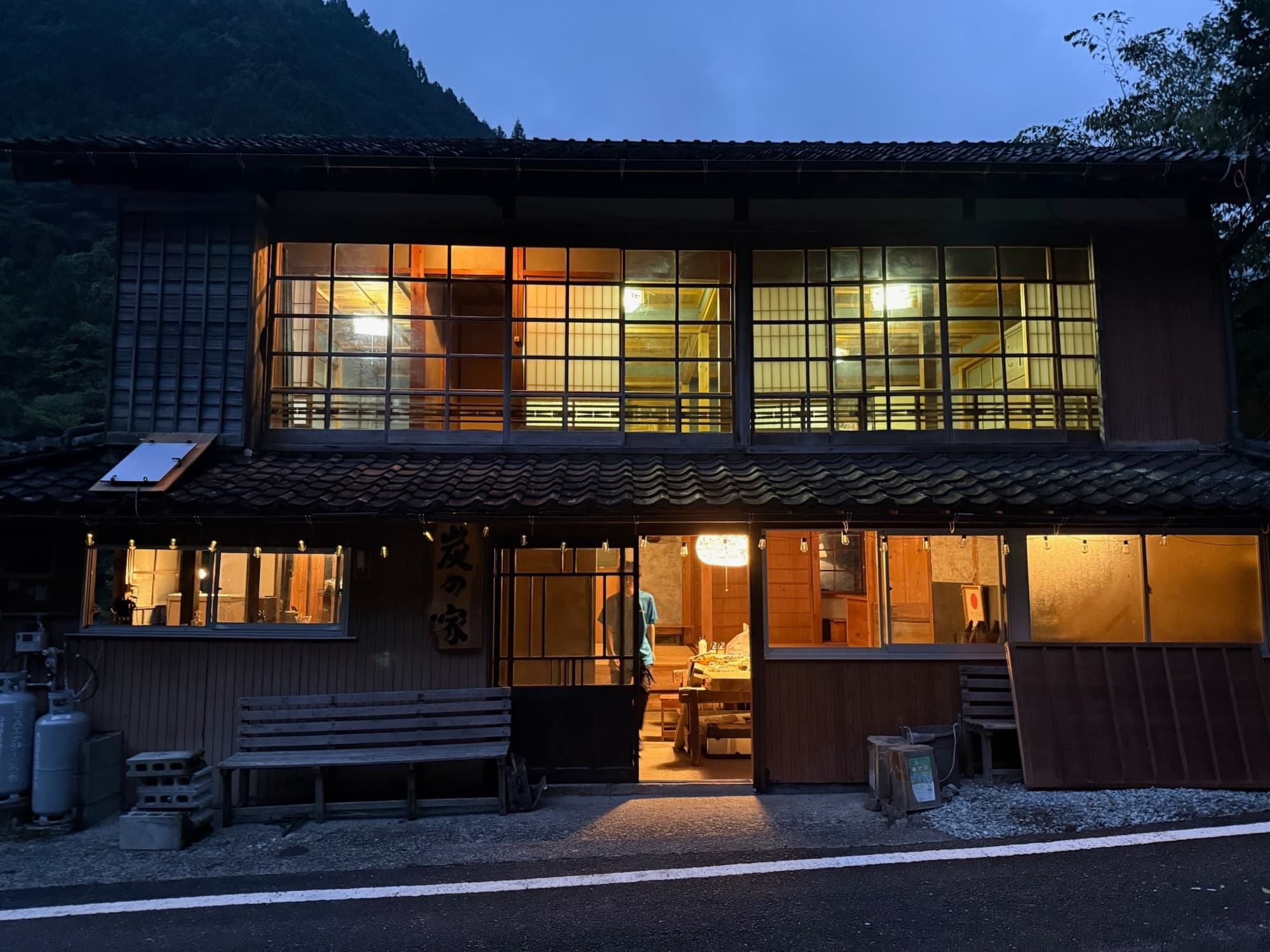
A hundred-year-old farmhouse in Iwagara sat empty for six years before we got the keys. What followed was fourteen months of careful work — structural repair, full clearance, and the slow process of building an interior that felt like it had always been there.
The first time we walked through it, we brought a torch. The power had been off for six years. The floorboards were dusty but solid. The main beam — a single piece of timber, probably forty centimetres across — was unchanged. The previous family had looked after the structure, even as they stopped using it.
Getting the keys took fourteen months. The house had been inherited by three children, all living outside Kochi. Japanese inheritance law is specific: all co-owners must consent to a transfer, and there is no mechanism to force a sale. We found the right person to make the introduction, and eventually everyone agreed. We'd do it again. The house was worth saving.
Clearance took three weeks. Old tatami, inherited furniture, decades of accumulated storage. Some of it went to the tip, some was donated through the local community centre, and a handful of pieces — a small tansu, a ceramic water basin — were cleaned and kept. These became the seeds of the interior.
The renovation was structural first. We repointed the foundation, replaced rotten sections in the eave, and relevelled the floors in the western room. Then we left the house alone for a while, living with what it was, before deciding what to add.
The interior came together through Unpeak. Each piece was chosen for what it contributed to the room — not as decoration, but as a functional presence. A long low table for meals and conversation. A floor lamp with a paper shade. A cast iron kettle on a charcoal brazier. The house started to feel inhabited again.
Sumi no Ie opened quietly. The first guests were friends. Then word spread, and the bookings became steady. People come for the river, for the charcoal experience, for the silence. Many come back.