The second property in Niyodogawa came to us through the same network as the first — a local introduction, a family with no plan for the building, and a structure that was better than it looked. The process was faster this time. We knew what we were doing.
The house is on a slope above the main road, set back from the river. It had been empty for four years. Less time than Sumi no Ie, and it showed — the damage was shallower. Mostly surface: some damp in the back room, moss on the north-facing exterior walls, a kitchen that needed full replacement.
Structurally, the timber frame was clean. The main posts were straight, the roof line was holding. We brought in the same carpenter who worked on Sumi no Ie. He walked through it once and said the bones were fine.
Clearance was quicker this time — we knew what to look for and what to keep. There was a set of sliding fusuma screens with hand-painted ink landscapes that we had restored. They now divide the main room from the sleeping area.
The renovation philosophy was the same as the first house: repair what needs repairing, leave what doesn't. We replaced the kitchen, re-screened all the shoji, and installed a proper bathroom. Everything else was cleaned, repaired if needed, and left in place.
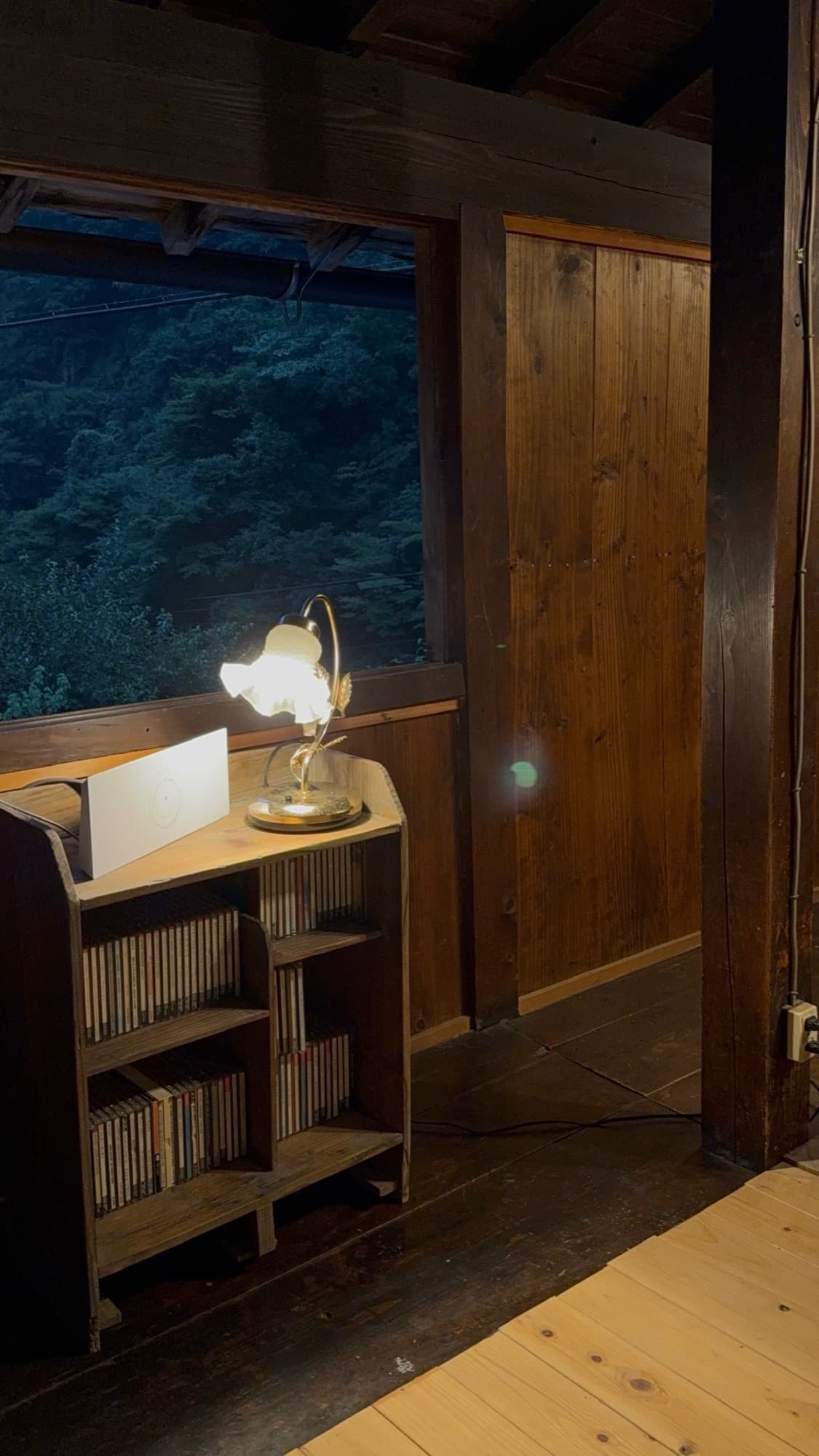
The interior is quieter than Sumi no Ie. Less Unpeak furniture, more open space. The view from the main room — over the terrace toward the cedar forest — does most of the work.
The house now operates as an Airbnb listing. Guests book directly through the platform. We coordinate access and maintenance. It's a different model to Sumi no Ie, but it fills a different need: visitors who want the Niyodogawa setting and total independence.